Join CafeMom Today! Autism Spectrum Disorder: Treatments

Friday, May 13, 2011

Elephant therapy program for Autism

Elephant therapy program for Thai autistic kids - FoxNews.com

Kuk-kik, a 14-year-old boy, punctuates his few, slurred words with yelps. Kong screams and bites his fingers when he can't figure out how much to pay for bananas. Other children freeze mid-motion, fix their gazes on minute objects and withdraw.

Enter Nua Un and Prathida — two gentle, lively and clever female elephants — and the mood among the autistic teenagers in Thailand changes as they begin their therapy, the world's first using these charismatic animals.

They scrub and soap their bristly hides, play ball games with the well-trained pachyderms and ride them bareback, smiling.

"Chang, chang (Elephant, elephant). Children, have you ever seen an elephant?" the group sings, clapping hands to the traditional Thai nursery tune and hugging the elephants' trunks. Disco-like, Nua Un bobs her head and sways.

Everyone cheers in a rousing climax to another day in this program in the forests of northern Thailand, which seeks to help autistic children through interaction with elephants.

Animal therapy for people with developmental disabilities — notably using dolphins, dogs and horses — is not new, and has provoked skepticism — especially in connection with expensive swimming-with-dolphins programs. But some anecdotal evidence and studies have shown positive results.

Wittaya Khem-nguad, the elephant project's founder, says parents "see improvements after the elephant therapy and that gives them this hope."

A small preliminary observation found improvements among four boys after three weeks of elephant therapy, but more research with larger samples is needed, says Rebecca Johnson, who heads the Research Center for Human Animal Interaction at the University of Missouri. A presentation on the Thai program was recently made at the school's Thompson Center for Autism and Neurodevelopmental Disorders.

Autism is incurable but therapy and medication can improve speech, learning and social problems, and reduce behavior like tantrums.

Elephants have lost their traditional roles in Thailand as trucks, teak loggers, and battle tanks, Wittaya, who gave up a career in advertising to work with elephants, started the project as a way to help the endangered animals regain their usefulness. After reading about horse riding therapy, he approached Chiang Mai University, where Nuntanee Satiansukpong, head of its occupational therapy department, suggested elephants might help those with autism.

Elephants, she says, provide the rich, attention-grabbing "sensory menu" beneficial to the autistic, while the animals' intelligence and other traits allow for a wide range of interactions with humans. Additionally, elephants are woven into the fabric of Thai culture, familiar to children since birth.


Tuesday, May 10, 2011

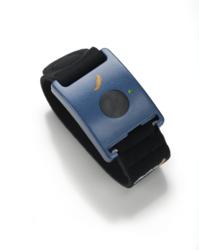
Affectiva Q™ Sensor 1.0, A Wearable Sensor For Measuring Emotion


Affectiva Launches Q™ Sensor 1.0, A Wearable Sensor For Measuring Emotion - Press Release - Digital Journal


Waltham, MA (PRWEB) May 09, 2011

Affectiva released today the Q™ Sensor 1.0, a wireless, wearable biosensor that measures a key physical component of emotions such as excitement, stress, fear, engagement, boredom and relaxation.

Available in a prerelease version since November 2010, the Q Sensor has enabled over 100 organizations to gather emotion data as part of their market research, media measurement and clinical and therapeutic research.

Customers include Boston University, Dartmouth College, Inter Public Group, IvyMount School, Massachusetts General Hospital (MGH), STAR Center (Sensory Therapies And Research), University of Notre Dame, University of Oregon, University of Wisconsin and Stanford University.

The Q Sensor measures electrodermal activity -- also called skin conductance or galvanic skin response (GSR) -- motion and temperature. It provides objective biomarkers and can be used in natural settings over days or months, unlike traditional wired sensors that require lab settings.

Here is how one customer is using Q Sensors to help with therapeutic research:

"For over 30 years, my team has conducted research in children with autism spectrum disorders, attention deficit disorders, sensory processing disorders and other neurodevelopmental conditions. Since 1995 our emphasis has been on trying to understand the physiological underpinnings of inappropriate arousal. Our investigations of biomarkers and the effects of treatment for children with these challenges has been fruitful, but it is hampered by the costly and constrained laboratory setting we have been required to use.

"Now my team uses Q Sensors to monitor arousal in children and therapists during actual treatment sessions to 'see' the children's physiological arousal in real time in a non-laboratory setting. We also monitor the therapists' arousal to study when they are best able to co-regulate their clients. We even use the real-time data as biofeedback with children as young as five, who realize they can control their own arousal.

"It is a beautiful process watching both children and therapists 'see' their sympathetic activation and gain control over previously unmanageable arousal. The options are limitless, and I believe the Q Sensor will radically transform the ability for researchers to obtain data in natural, non-laboratory settings," said Lucy Jane Miller, Ph.D., director of the STAR Center (Sensory Therapies And Research) in Greenwood Village, CO.

The Q 1.0 includes a hardened case, 24-hour battery life and storage for three months of data. It comes in a wristwatch-style unit that is 2" x 1.5". An additional version, available this summer, is a 1.5" square unit that can be inserted into a soft band for use with children and on locations other than the wrist. Both versions include downloadable software for viewing data or for exporting it to common formats. The Q 1.0 is priced at $2,000 per unit, with discounts available for bulk purchase and non-profit uses.

The Q Sensor's core technology, which was developed at the Massachusetts Institute of Technology (MIT), has been validated in peer-reviewed journal papers demonstrating the accuracy of the electrodermal activity sensors used on the wrist compared to FDA-approved electrodermal activity sensors wired to fingertips. The validation is especially key for scientific researchers who have been constricted in the past to using wired sensors in lab settings.

"My primary area of research is depression in patients with heart disease. One of my research fellows and I are developing a project that examines whether sympathetic physiologic arousal is different in patients with depression or anxiety than in those without. The Q Sensor's unobtrusive form and validated data-readings will help make this possible without wiring patients to bulky devices," said Jeff Huffman, a physician in the psychiatry and medicine division at Massachusetts General Hospital in Boston, MA.

Affectiva was founded in 2009 by MIT Media Lab Professor Rosalind Picard and Dr. Rana el Kaliouby, two scientists who came together with National Science Foundation (NSF) funding to develop technologies to help people on the autism spectrum. Silicon Valley executive David Berman, formerly president of worldwide sales and services at Cisco WebEx, joined the company as CEO in 2010. It is privately held with funding from individuals and the Peder Sager Wallenberg Charitable Trust, represented by Lingfield AB.

###

Read the full story at http://www.prweb.com/releases/2011/5/prweb8398226.htm


Friday, May 6, 2011

Adeli Suit Therapy for Autism?

AllTernative Gym Transforms the Lives of Those With Special Needs - EIN News - News Media Monitoring

AllTernative Gym is transforming lives with its state-of-the-art fitness and therapy programs developed specifically for those with special needs such as cerebral palsy, autism and other neurological disorders.

DALLAS, GA, May 05, 2011 /24-7PressRelease/ -- AllTernative Gym is transforming lives with its state-of-the-art fitness and therapy programs developed specifically for those with special needs. Founded by Certified Fitness Trainer and Expert, Angie Gomez, AllTernative Gym provides Adeli Suit Therapy, Fitness Training and Hyperbaric Oxygen Therapy.

"As a parent of a child with special needs, I truly understand what parents are looking for in a therapy center. And, I treat each child as if he were my own and each adult as if they were a family member," states Angie Gomez, founder of AllTernative Gym. Angie is an expert in the Adeli Suit Therapy method. She is the only person from the original 3 people that completed the entire Adeli Suit Therapy training program in Poland and Russia that is actually working with the Adeli Suit and its methods today. "We're the only center to have and use a 9 foot cage "UEU" (universal exercise unit) which enables us to provide therapy treatment to adults."

AllTernative Gym is ideal for cerebral palsy patients, stroke survivors, brain and spinal trauma, multiple sclerosis, near drowning, down syndrome, obesity and autism. Although patients receive a world-class therapy program, therapy at AllTernative Gym costs less than other centers because the staff members are fitness trainers and not physical or occupational therapist. Angie and her team make it much more affordable for parents and their loved ones to get the care they need.

"The AllTernative Gym has been an answer to our prayers. Riding a bicycle with minimal assistance is something we never even dreamed of! Angie and her team not only provide our family with genuine sense of belief that Morgan can accomplish her goal of walking, but, they have also given her the confidence and attitude of "I CAN DO IT". The quality of therapy Morgan receives is outstanding and her continued advancement shows that we made the right decision," stated Morgan's mom, Jennifer Johnson. This is just one of the many success stories from the patients of AllTernative Gym. "Our motto is, every day brings another success story at AllTernative Gym," says Angie.

Limited space is available for the 2011 summer schedule. Please visit www.alternativegym.com to register and read more testimonials.


Wednesday, May 4, 2011

Art Therapy for Autism | Autism Key

Art Therapy for Autism | Autism Key

Individuals with autism have innate visual prowess, as I discussed in a previous article. Given that children with autism are so visually oriented, it makes perfect sense to engage them in art activities, be it formally with an art therapist, casually in other classes or at home.

Because children on the autism spectrum struggle with communication, traditional psychotherapy is not a viable option for them, but art therapy is. Art therapists report that children with autism who engage in one-on-one sessions show an improved ability to imagine and think symbolically, enhanced ability to recognize and respond to facial expressions, new ability to manage sensory issues such as a range of texture and greater fine motor skills.


Cost often puts autism treatment out of reach | Iowa Independent

Cost often puts autism treatment out of reach | Iowa Independent

Willey Gale, a 13-year-old Coralville boy with autism, sat close to his mother, Casey, one March evening counting the days to spring break on her fingers.

“Saturday, one. Sunday, two,” he said, clutching a finger for each number.

What did Willey plan to do during these days?

“Play video games!” he answered loudly.

Moments later, he wriggled from Casey’s arms and darted up carpeted stairs. He ran past a ketchup stain, the mark of another of Willey’s endearing quirks – he loves ketchup – and into his room. That’s his haven; it’s where he acted out scenes from two shows he was watching at once – one from his television, another from his laptop.

Treatment Lets Mom, Willey Connect

“No school tomorrow,” he told Casey, as she sat next to him in his room. “Don’t you wake me up.”

Willey has his own way of doing things, and in all likelihood, he will never talk to his family in a typical way. But with speech treatment, he has made progress, and Casey loves his unique language of short sentences.

“We can have conversations with him now, and that’s important,” she said.


Autism treatment out of reach for many struggling families | The American Independent

Autism treatment out of reach for many struggling families | The American Independent


Willey Gale, a 13-year-old Coralville boy with autism, sat close to his mother, Casey, one March evening counting the days to spring break on her fingers.

“Saturday, one. Sunday, two,” he said, clutching a finger for each number.

What did Willey plan to do during these days?

“Play video games!” he answered loudly.

Moments later, he wriggled from Casey’s arms and darted up carpeted stairs. He ran past a ketchup stain, the mark of another of Willey’s endearing quirks – he loves ketchup – and into his room. That’s his haven; it’s where he acted out scenes from two shows he was watching at once – one from his television, another from his laptop.

Treatment Lets Mom, Willey Connect

“No school tomorrow,” he told Casey, as she sat next to him in his room. “Don’t you wake me up.”

Willey has his own way of doing things, and in all likelihood, he will never talk to his family in a typical way. But with speech treatment, he has made progress, and Casey loves his unique language of short sentences.

“We can have conversations with him now, and that’s important,” she said.


Autism Blog - Maryland Board of Phyicians: Mark Geier “endangers autistic children and exploits their parents” « Left Brain/Right Brain

Autism Blog - Maryland Board of Phyicians: Mark Geier “endangers autistic children and exploits their parents” « Left Brain/Right Brain

Tuesday, May 3, 2011

Yoga Beneficial for Children with Autism | Autism Key

Yoga Beneficial for Children with Autism | Autism Key

The ancient art of yoga is proving to have great benefits for children on the autism spectrum. Yoga comprehensively addresses their heightened anxiety, poor motor coordination and weak self-regulation, something that otherwise is very difficult to do.

Yoga is particularly instrumental in helping kids with autism learn self-regulation. By becoming aware of their bodies and aware of their breathing, yoga provides them with the ability to cope when they start to feel anxious or upset.


Monday, May 2, 2011

Doreen Granpeesheh: Approaching Autism with CARD

Doreen Granpeesheh: Approaching Autism with CARD


Early intervention is imperative in the treatment of children with autism for the best possible outcome. Dr. Doreen Granpeesheh has the most comprehensive approach to the treatment of these children worldwide through the CARD system of ABA which is the process of systematically applying interventions based upon the principles of learning theory to improve socially significant behaviors to a meaningful degree. Dr. Doreen Granpeesheh will discuss the details of this systematic approach to the assessment and evaluation of behavior, and the application of interventions that alter behavior. ABA is the most objective discipline focused on the reliable measurement and objective evaluation of observable behavior to this date. Programs based upon ABA methodologies are grounded in the well-established principles of learning and operand conditioning, as influenced by the works of researchers such as Edward L. Thorndike and BF Skinner. The use of single case experimental design to evaluate the effectiveness of individualized interventions is an essential component of ABA programs. ABA generally focuses on the process of behavior change with respect to the development of adaptive, pro-social behavior and the reduction of maladaptive behavior. Specific "socially significant behaviors" include academics, communication, social skills and adaptive living skills.


Labels

420 (1) AABA (1) AAT (9) ABA (27) Abilify (2) Acamprosate (1) Acupuncture (2) Adeli Suit Therapy (1) AEIOU Early Intervention (1) Afinitor (1) AIT (3) Algae (1) Alzheimer's Drugs (2) Amantadine (1) Amino Acids (1) AMMT (1) Anat Baniel Method (1) Animal Assisted Therapy (15) Anti psychotics (2) Anti-convulsants (2) Anti-fungal therapy (1) Anti-yeast therapy (2) Antibiotics (1) Antidepressants (7) Antioxidants (1) Antipsychotics (2) Applied Affectionate Behavior Analysis (1) Applied Behavioral Analysis (26) Arbaclofen (1) Art Therapy (9) Assistive Technology (18) Athletics (1) Audio-Visual Entrainment (1) Auditory Integration Training (3) Auditory Motor Mapping Training (1) Augmentative Communication (17) Autism (7) Autism Clinical Trials Network (1) Autism Fun (2) Autism Treatments are Expensive (11) Autism360 (1) AVE (1) Baclofen (2) Bacteroides (1) BCAAs (1) BDNF (1) benzodiazepine (1) Better Diagnosis (1) Biofeedback (9) Biomedical Treatments (4) Brain Plasticity (1) Branched Chain Amino Acids (1) Bumetanide (1) Bumex (1) Burinex (1) Buspar (1) Buspirone Hydrochloride (1) Cannabis (7) Cerebral Folate Deficiency (1) Character Therapy (1) Cheerleading (1) Chelation (4) Chewing Gum (1) Chiropractic (1) Cholesterol (1) CLM (1) clonazepam (1) Coffee (1) Communication Devices (16) Competent Learner Model (1) Computers (12) Contrarian (1) Cord Blood (1) Costs of Treatment (17) CranioSacral Therapy (1) Cutting-Edge Therapies (2) Cybertherapy (1) D-Cycloserine (1) DAN (5) Dance (1) DATS (2) DCS (1) DEFEAT AUTISM NOW (6) Detecting Autism (1) Detox (1) Developmental Individual Difference Relationship Model (3) Diagnosing Autism (1) Diet (6) DIR (5) Disco (1) Discrete Affectionate Trials (1) Discrete Trial Training (4) DNA (1) Dolphin Dome (1) Dolphin Therapy (8) Drugs (34) DTT (5) DynaVox (14) Early Intensive Behavioural Intervention (1) ECLIPSE Model (1) Ecstasy (MDMA) (1) EEG Biofeedback (7) EIBI (1) Elephant therapy (1) Enzyme (1) Epigenetics (3) Epilepsy (5) Epsom Salts (2) Equine Therapy (10) Face Recognition (1) Facial Reflexology (1) Fatty Acids (2) Fish Oil (2) Floor Time (8) Floortime (7) Fluoxetine (1) fMRI (1) Folic Acid (2) Functional Magnetic Resonance Imaging (1) Games (3) Gene Therapy (4) Genome Sequencing (1) Glutathione (1) Grace (1) HBOT (16) Hippotherapy (7) Hormones (1) Horse Therapy (11) Hydration (1) Hyperbaric Oxygen (16) Hyperinsulinemia (1) Hypnosis (1) Hypnotherapy (1) iCommunicate (1) Immunotherapy (1) Insurance Coverage for Autism (20) Intravenous immunoglobulin (1) iontoporation (1) iPad (9) iPhone (7) iPod (9) iPrompts (1) IVIG (1) Law of Attraction (1) LEGOS (2) Leucovorin (1) Leupeptin (1) Lexapro (escitalopram) (2) Life Skills (3) Lovass (1) Lupron (5) Marinol (1) Masgutova method (1) Masgutova Neuro-sensory-motor Reflex Integration (2) Massage (1) MB12 (4) Medical Marijuana (6) Medications (9) Meditation (1) Mendability (1) Methyl-B12 (4) Methylcobalamin (2) Miracle Mineral Supplement (2) Misc (5) Mitochondrial Dysfunction (1) MMS (2) MnemeTherapy™ (1) MNRI (1) Music Therapy (6) N-Acetylcysteine (1) NAC (1) NAET (1) Namenda (1) Nasal Insulin (1) nasal spray (2) NATURAL ENVIRONMENT TRAINING (2) Natural Language Paradigm (1) Naturalistic Learning (2) NET (1) Netbook (1) Neurofeedback (9) Neuroliminal Training (2) NHE6 protein (1) Nicotine Patch (1) Nintendo (1) NLP (1) NT (2) Nutritional therapy (1) Occupational Therapy (1) Omega-3 (3) Online Autism Therapy (3) Optimize Strengthen Rejuvenate (3) OSR (4) Oxidative Stress Release (3) Oxytocin (2) P.L.A.Y. Project (1) Parasitic Worms (1) PECS (8) PEMF (1) Physical Therapy (1) Picture Exchange Communication System (8) Pilates (1) Pivotal Response Therapy (2) Play and Language for Autistic Youngsters (1) Pot (1) Probiotics (3) Proloquo2Go (1) Propranolol (1) Protease Inhibitor (1) Prozac (2) PRT (1) Pulsed Electromagnetic Field Therapy (1) Rapamycin (1) Rapid Prompting Method (1) Reducing Oxidative Stress (1) Respen-A (2) Response Interruption/Redirection (1) RIR (1) Risperdal (1) Risperidone (4) Ritalin (1) Robots (3) RPM (1) rTMS (1) SAVE (1) Scams (1) SCERTS (1) Screening for Autism (1) Secretin (1) Seizures (4) Sensori-motor Auditory Visual Education (1) Sensory Enrichment Therapy (1) Sensory Integration Therapy (5) Service Dogs (5) Shank3 Protein (1) Shaping and Chaining (1) Sign Language (1) Single Nucleotide Polymorphisms (1) SIT (1) Skateboarding (1) SNP (1) Social Communication Emotional Regulation Transitional Support (1) Software (4) Speaker Immersion (1) Speech-Language Therapy (2) Spirulina (1) Sports (1) SSRIs (1) Stem Cells (6) Stimulants (1) Studies (1) STX209 (2) Supplements (7) Surfing (2) Taekwondo (1) Tangible Time Management (1) TEACCH (5) Telehealth (1) Telemedicine (1) THC (4) The Secret (1) Therapeutic Horseback Riding (9) Therapy Dogs (1) THR (7) Time Timer (2) Timothy Syndrome (1) TMS (2) Toxic (1) Transcranial Magnetic Stimulation (2) Transgenic Mouse Model (1) Vanspar (1) VB (3) Verbal Behavior Approach (1) Verbal Behavior Model (3) Video Games (4) Video Modeling (1) Vitamin B6 [Pyridoxine] (1) Vitamins (6) Wii (1) Wrestling (1) Xbox Kinect (2) Yoga (7) Zinc (1)

Add This ...

Bookmark and Share