
Most people know that they are supposed to drink water, but up to 75 percent of Americans may be functioning in a chronic state of dehydration, according to new research.
...Water is necessary for the body to digest and absorb vitamins and nutrients. It’s also key to proper digestion, it detoxifies the liver and kidneys, and carries waste away, Webb said.
Showing posts with label Supplements. Show all posts
Showing posts with label Supplements. Show all posts
Wednesday, July 3, 2013
Up To 75% Of Americans Functioning In Chronic State Of Dehydration ...


Friday, December 21, 2012
Effective or Health Fraud? DNA Testing and Autism
Autism Cures Promised by DNA Testers Belied by Regulators - Businessweek
More @ http://www.businessweek.com/news/2012-12-21/autism-cures-promised-by-dna-testers-belied-by-regulators#p1

April Hauge, a nurse practitioner in Weimar, California, spent $500 on a genetic test for her autistic son in 2009 that led to purchasing thousands of dollars in vitamins and supplements. Impressed with the results, she’s now selling advice on the approach to others.
There’s just one problem: the DNA tests and related treatments have scant backing from science and U.S. government officials. They’re untested, unproven, and may constitute “health fraud,” doctors, regulators and concerned parents said.
For alternative-medicine providers in general, the genetic tests are nothing but a “marketing tool” to sell unproven treatments, said James Laidler, a retired physician and adjunct professor at Portland State University whose 19-year-old autistic son has tried alternative therapies.
“You always hear the testimonials from the people who got better, not the people who stayed the same or got worse,” Laidler said. “They don’t want to hear somebody saying this is snake oil.”
Doctors and clinics across the U.S. are using the exploding science of DNA testing to feed anxieties and sell hope to people with autism and other hard-to-treat disorders.
Emboldened by meager state and federal regulation, purveyors of alternative medicine offer genetic tests costing hundreds of dollars to worried parents and patients, and then sell advice on supplements and diet based on results purporting to spot disease-causing deficiencies. They claim to be the panacea for everything from autism to chronic fatigue syndrome to the effects of aging.
More @ http://www.businessweek.com/news/2012-12-21/autism-cures-promised-by-dna-testers-belied-by-regulators#p1
Tuesday, March 9, 2010
Cutting-Edge Therapies for Autism
Cutting-Edge Therapies for Autism
Parents of children coping with autism spectrum disorders may feel like they face more questions than answers. While little is truly understood of autism, many parents rely on behavioral therapies to improve their child s quality of life and encourage independence. First in what will be an annually updated handbook, Ken Siri and Tony Lyons delve into cutting-edge, hands-on therapies that go beyond the diet-behavior connection, nutrition supplements, and medical treatment.
Readers of Cutting-Edge Therapies for Autism, 2010 2011 will come away with a wealth of meaningful knowledge and coping mechanisms to employ: Learn how animal-assisted therapy such as horseback-riding advances developmental growth; art therapy such as finger-painting encourages self-expression; and floor-time play therapy such as puzzle-solving teaches turn-taking and environmental awareness. Social skills therapies, speech and language therapies, and even music therapy are also explored in this volume.

Autism Supplements: Vitamin B6 [Pyridoxine]

Vitamin B6 [Pyridoxine]
Helps with the metabolism of the amino acids. Helps with PMS, carpal tunnel syndrome, and motion sickness. Deficiencies can cause weakness, confusion, depression, eczema. Birth control pills, antibiotics, and smoking can deplete B6. Can help with epilepsy, asthma, morning sickness, and kidney stones. Too much B6 over a prolonged period of time can lead to peripheral neuropathy [tingling and other sensations]. Can help heal "leaky gut". Some kids need very high doses, which can be helpful for focus/attention, body awareness, a "calmness", and elimination of climbing and jumping behaviors. However, for some kids, especially those with phenol intolerance, B6 can cause hyperactivity. Vitamin B-6 is a water-soluble vitamin and is part of the vitamin B complex. It is found in beans, nuts, legumes, eggs, meats, fish, whole grains, and fortified breads and cereals. Taking excessive amounts of vitamin B6 can cause a magnesium deficiency. It is important to give magnesium alongside Vitamin B6 to avoid this problem\
SOURCE: The Autism Supplements Guide
Related:
- Vitamin B6 - Wikipedia, the free encyclopedia
- Treating Autism with Vitamin B6: Pyridoxine & Magnesium ...
- Autism Therapy: Vitamin B6 and magnesium | Healing Thresholds
- Vitamin B6 in Autism: The Safety Issue
- Does Vitamin B6 Help in The Treatment With Autism?
- BRAINBOOSTERS AND SUPLEMENTS FOR AUTISM - ImmInst.org Forums
Friday, November 7, 2008
Tuesday, November 4, 2008
Folic Acid as Autism Treatment
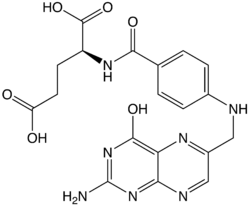 Folic acid: (also known as Vitamin M and Folacin) and Folate (the anionic form) are forms of the water-soluble Vitamin B9.
Folic acid has been reported to be helpful in autism (ARRI 8/4). The great French researcher Jerome Lejeune reported that supplements of about 250 mcg of folic acid per pound of body weight per day brought on major improvement in several autistic children. Dr. Lejeune gave thousands of retarded children (mostly Down syndrome) 20 mg of folic acid per day in his various studies, with no harm, nor would any harm be expected.
These occur naturally in food and can also be taken as supplements.
Folate in foods and other sources
Leafy vegetables such as spinach, turnip greens, lettuces, dried beans and peas, fortified cereal products, sunflower seeds and certain other fruits and vegetables are rich sources of folate. Liver and liver products also contain high amounts of folate, as does bakers yeast. Some breakfast cereals (ready-to-eat and others) are fortified with 25% to 100% of the recommended dietary allowance (RDA) for folic acid. A table of selected food sources of folate and folic acid can be found at the USDA National Nutrient Database for Standard Reference.Folate is also found in Vegemite or Marmite, with an average serving (5g) containing 100μg. Folate is also synthesized in bacteria.
Related: Folic Acid on Wikipedia
Omega-3 Fatty Acids and Autism

Omega-3 Fatty Acids - Feeding the Brain
Omega-3 fatty acid supplementation is quite popular in the treatment of autism. A study performed on the effects of Omega-3 supplementation on autistic behaviors showed improvement in sleep, cognition, overall health, social interaction, and eye contact.
Three types of Omega-3 fatty acids are a-linolenic acid (ALA), docosahexaenoic acid (DHA) and eicosapentaenoic acid (EPA). Omega-3 and Omega-6 fatty acids compete with each other and it is important to keep them in the proper ratio: the ideal ratio of Omega-6 to Omega-3 is 1:1. Primary sources of Omega-3s are fish, flaxseeds, and walnuts, while Omega-6 fatty acids are found in vegetable oils such as corn, sunflower, soy, and safflower and in margarine. Most Americans consume far too many Omega-6 fatty acids and not enough Omega-3 fatty acids, disrupting the balance of Omega-6 to Omega-3. Many experts believe that the ratio of Omega-6 to Omega-3 consumed by most Americans is 20:1 and some up to 50:1! We are in desperate need of Omega-3 supplementation!
Flax seeds, walnuts, and some dark, leafy vegetables contain ALA. Cold water oily fish such as wild salmon, cod, and sardines are excellent sources of DHA and EPA. (Note, only wild fish should be consumed - farm raised fish are problematic for many reasons, including their high levels of Omega-6 and lower levels of Omega-3s.) Cod liver oil and fish oil are very concentrated sources of DHA and EPA. These oils should be purified to be free from detectable levels of mercury, lead, PCBs and other contaminants. They should also contain vitamin E to prevent oxidation of the oils.
Related:
Subscribe to:
Posts (Atom)
Add This ...


