
A NEW APPROACH TO SPECIAL NEEDS : USING RELATIONSHIPS TO BRING OUT CHILDREN'S INNATE WARMTH AND NURTURING
By Carolyn Braff
To call the Rebecca School a “special needs” school doesn’t quite tell the story of this innovative facility on East 30th Street. Staff and administrators work daily to reinvent the way special needs children are educated, and the way their families are supported during the process.
Relying on the Developmental Individual Difference Relationship-based (DIR) model, the three-year-old school works with a host of counselors, social workers and an advisory board to involve families in the education process for its students, who range in age from 4 to 18.
The Rebecca School serves children with neuro-developmental delays in relating and communicating, which includes children diagnosed on the autistic spectrum. While most special needs schools use behavioral approaches, the DIR model relies on relationships to figure out where the difficulties in a child’s development lie, meet the child at this developmental level then work to move ahead.
“The thing that sets us apart mainly is the overwhelming philosophical methodology that we use, the DIR model,” said Tina McCourt, program director at the Rebecca School. “It’s very different from the way most people work with children, particularly on the autistic spectrum.”
[FULL STORY]
Related:
Thursday, November 6, 2008


Wednesday, November 5, 2008
Therapeutic equestrian program offers emotional and physical benefits
When Ella Smith, of Mt. Lebanon, began a therapeutic horseback riding program a year ago, the girl was hesitant to even touch a horse.
Now, 9-year-old Ella has worked up to petting, feeding and riding the horse, too, said her mom, Julie Smith.
In-Stride With Therapeutic Riding Inc., a 2-year-old, nonprofit program operating at the West Pike Run Equestrian Center in Coal Center, helps children with special needs to gain confidence and develop abilities to focus, relax and accept change while learning to ride, said founder and director Dana Flaherty, 34, of North Strabane.
Riding also can help to develop core muscles and improve stability, which often is an issue for children with physical disabilities, Ms. Flaherty said.
In-Stride began with one rider and has had as many as 12, but enrollment recently dropped to six, largely due to its location in rural Washington County, Ms. Flaherty said.
Starting Wednesday, she will begin offering additional lessons Sundays at Morning Star Stables on Ridge Road in South Park. She also hopes to open another satellite location in Eighty Four.
"Ella loves it," Ms. Smith said. "She's not been confident when doing other things and now she's extremely confident with this."
Ella is diagnosed with pervasive development disorder, a form of autism, and with attention deficit hyperactivity disorder. Ms. Smith and her husband, Scott, found information about In-Stride on the Internet after learning about a similar program while vacationing in Virginia with Ella and her brother, Otis, 8.
Related:Tuesday, November 4, 2008
Citalopram (Celexa) Adverse Events Common in Children with Autism?
Adverse Events Common With Citalopram in Children With Autism Disorder: Presented at AACAP
CHICAGO -- November 3, 2008 -- Exposure to selective serotonin reuptake inhibitors (SSRIs) such as citalopram is associated with adverse effects in children with autism spectrum disorder (ASD), according to results of a 5-centre, double-blind, placebo-controlled study presented here at the American Academy of Child and Adolescent Psychiatry (AACAP) 55th Annual MeetingMORE
Horses and Humans Research Foundation
Healing People on Horseback
Chagrin Falls, Ohio - November 3, 2008 - Equine-assisted healing techniques for people diagnosed with autism and cerebral palsy will be scientifically tested in 2009 by two separate professional research teams, with the assistance of $100,000 in funding from the Horses and Humans Research Foundation.
The foundation, which supports rigorous scientific research that substantiates the healing impact of horses on humans, reported that applications for funding were received from a variety of countries and represented 16 universities. The stringent selection process resulted in awards to Good Hope Equestrian Training Center in Miami, FL and the University of Quebec at Trois-Rivieres, Canada.
"One in every 150 kids has autism," said Molly Sweeney, HHRF Board of Directors' president. "This pervasive development disorder can have devastating impacts on a family. The economic impact per child is estimated at $30,000 annually, and there are very few effective treatments. We are thrilled at the prospect of providing evidence of hope."
The Good Hope Equestrian Training Center is a 20-acre facility in southern Florida. Their research team will evaluate the effects of equine interaction on 7- to 12-year-old children diagnosed with autism. The research will focus on social function, attention and distractibility.
The University of Quebec at Trois-Rivieres is the first grant awarded internationally by the Horses and Humans Research Foundation. The university, located 85 miles north-east of Montreal, will conduct research measuring the effect of a ten-week hippotherapy Intervention on the control of head and trunk movement of children with cerebral palsy. Eighteen subjects and their horses will be fitted with telemetry-recording accelerometers to document the speed and magnitude of the subjects' upper body and head displacement throughout the program and eight weeks after.
The Horses and Humans Research Foundation was established in 2002 to fund research that will improve equine-assisted activities/therapies (EAA/T) best practices and to increase awareness of EAA/T benefits.
There are nearly 750 EAA/T programs in the United States affiliated with the North American Riding for the Handicapped Association and over 40,000 participants, which represents only a portion of the programs operating nationally and internationally.
[FULL ARTICLE]
Folic Acid as Autism Treatment
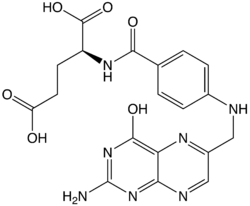 Folic acid: (also known as Vitamin M and Folacin) and Folate (the anionic form) are forms of the water-soluble Vitamin B9.
Folic acid has been reported to be helpful in autism (ARRI 8/4). The great French researcher Jerome Lejeune reported that supplements of about 250 mcg of folic acid per pound of body weight per day brought on major improvement in several autistic children. Dr. Lejeune gave thousands of retarded children (mostly Down syndrome) 20 mg of folic acid per day in his various studies, with no harm, nor would any harm be expected.
These occur naturally in food and can also be taken as supplements.
Folate in foods and other sources
Leafy vegetables such as spinach, turnip greens, lettuces, dried beans and peas, fortified cereal products, sunflower seeds and certain other fruits and vegetables are rich sources of folate. Liver and liver products also contain high amounts of folate, as does bakers yeast. Some breakfast cereals (ready-to-eat and others) are fortified with 25% to 100% of the recommended dietary allowance (RDA) for folic acid. A table of selected food sources of folate and folic acid can be found at the USDA National Nutrient Database for Standard Reference.Folate is also found in Vegemite or Marmite, with an average serving (5g) containing 100μg. Folate is also synthesized in bacteria.
Related: Folic Acid on Wikipedia
Neuroliminal Training
Giving Dolphin Therapy a run for it's money today is Neuroliminal Training (NT), subliminal messaging techniques.
Solving Autism Problems with Neuroliminal Training
Neurofeedback (EEG & HEG biofeedback) clinics that work with autistic children are still rare.
Very few have been willing to take on an autistic child, because of the difficulties involved:
1. How do you attach sensors to an autistic child? Even using a helmet?
2. If you do get a connection, how do you motivate such a child? (A key to success).
3. Autism can bankupt any family except the very wealthy.
These problems are "no problem" with Neuroliminal Training (NT). All three of the above problems above are solved with NT.
Not only are no sensors or headsets involved, but with NT, motivation isn't important at all.
Since NT works by using a subliminal messaging technique that works during sleep, or as a background to play or study, it's done at home using a repeating CD, and at an affordable cost to even a low income family. NT improves autism symptoms gradually over time in the same way as NFB. It's slow, but steady progress.
Subscribe to:
Posts (Atom)
Add This ...


